Q. What is a Woodworm Hole?
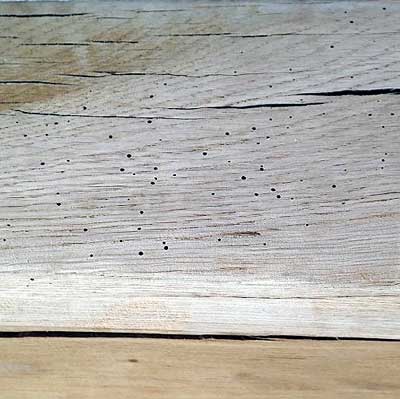
A. The hole that the Beetle makes to escape from the wood is called a flight hole. It is cut by the beetle when it emerges from the little (pupal) chamber where it changed (metamorphosed) from a grub (or 'worm') into a beetle, just as a Caterpillar changes into a Butterfly.
Q. Does a woodworm eat the wood?
A. No. The beetle only cuts a short tunnel and a hole, it does not actually eat at all. The tunnel and hole often contain the wood cuttings and these can be seen dribbling from the hole.
Q. How big are the woodworm holes?
A. Between 1mm and 2mm, round. They look like 'dart' holes. If you look at them with a magnifier you will see the bite marks around the edge of the holes, indicating that they are not man-made
Q. How does the woodworm hole tell me that the woodworm has been active recently?
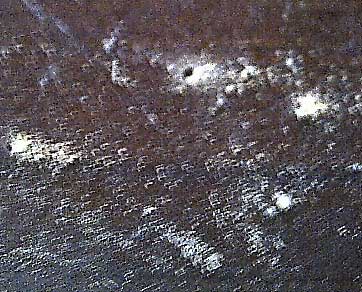
A. Look down the hole with a magnifying glass. If the wood dust and hole edges look bright in colour, it is most likely to be an 'active' infestation. An 'active' infestation is considered to mean that the insect emerged in the last 2 years and therefore Treatment is justified. If the wood dust and hole edges look grey and dirty, it is probably an old infestation and there is no need to carry out Chemical Treatment.
Q. I can see dust coming out of the holes. What does this mean?
A. The dust is called 'frass'. It is the bore dust that the common furniture beetle produces when he cuts holes. It is cream coloured, formed into lemon shaped pellets and gritty when rubbed between the fingers.
Q. What time of year do the holes appear?
A. The holes normally appear between May and September. This is the time when the beetle is boring it's way out.
Q. What are the holes called?
A. The holes are called Flight holes, Emergence holes and Exit holes. They are only produced by the beetle, not the wood 'worm', which lives deep inside the wood and bores tunnels.
Q. Is it worth filling the holes?
A. Yes - fill them with wax, wood filler or paint/varnish. This enables you to spot fresh holes in the future and tell whether the attack is dying out.
Q. A Building Surveyor has reported that I have woodworm in my loft, but I cannot find any holes?
A. Not uncommon. Sometimes Surveyors assume, based on the age and type of house, that it must have woodworm, without even looking inside the roof.
Q. I don't see any holes, only open topped tunnels?
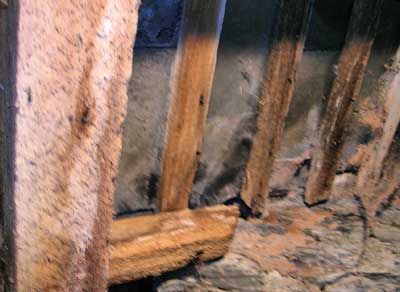
A. These are likely to be old tunnels that have been exposed as the result of wear, or sanding.
References | Privacy Policy | Returns Policy | Home Page
Woodworm Expert Forum,
Property Repair Systems,
T: 01626 331351 F: 01626 331143
